

Where Do You Draw The Line Between Free Speech And Indecency?
While the internet has never been a utopia devoid of trolls, some experts say fake news, hate spoken language, and terrorist propaganda are turning it into a digital cesspool.
In a country that prides itself on its Beginning Amendment, that leaves social media companies with the delicate task of sorting out what's complimentary speech and deciding what they won't tolerate on their platforms.
Related: Protecting Your Internet Presence in the Age of Donald Trump
Final month, members of the Global Network Initiative, including Facebook, Google, and LinkedIn, said they shouldn't exist pressured by governments to alter their terms of service or restrict content. But with the ascent in fake news and digital terrorism, some experts say information technology's time for more action.
"Gratis speech is this mantra people echo over and over to justify all sorts of terrible things they say," Jen Golbeck, a professor at the University of Maryland's College of Data Studies, told NBC News. "A lot of information technology is straight-up harassment designed to upset the person who is on the other end."
Chances Are, Yous've Been Harassed Online
A Pew Research Heart survey published in 2022 found that 4 out of x internet users had experienced some caste of online harassment. Of that group, 40 percentage of users said they took steps to reply to it, whether by blocking the person, reporting them to the responsible site or even withdrawing online.
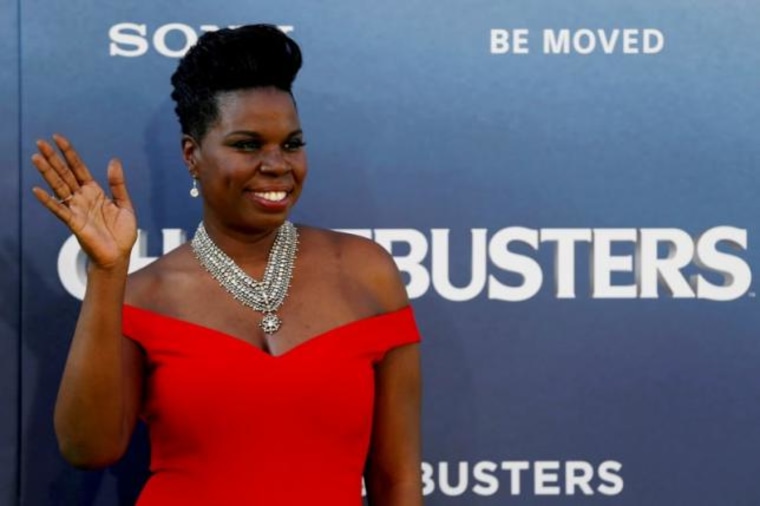
Right-fly journalist Milo Yiannopoulos was permanently banned from Twitter for harassing comedian Leslie Jones. Robin Williams' girl, Zelda, retreated from the service for a while afterwards she was bombarded with corruption post-obit her father's death. And former Reddit CEO Ellen Pao was on the receiving end of fell attacks and threats after she tried to crack down on hate speech communication and revenge porn on the site.
Those are only a few of many cases.
When Does Extremism Cantankerous the Line?
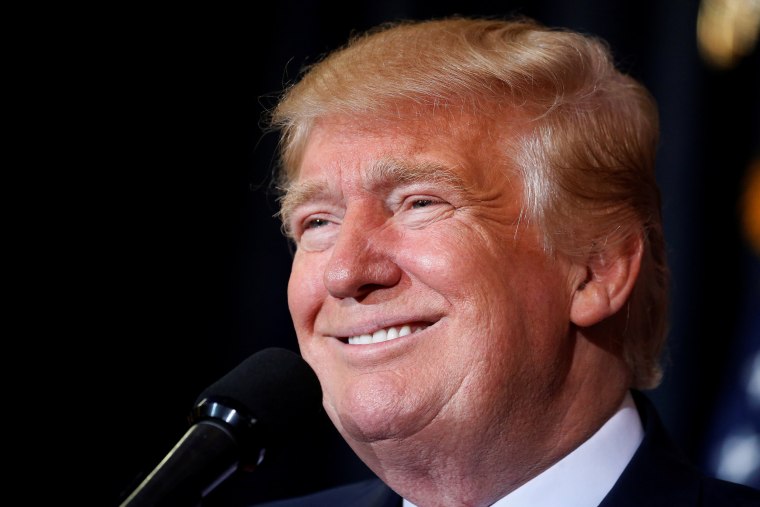
When it comes to combating online extremism, President-elect Donald Trump has hinted he would arbitrate. Trump said during his campaign that he would call on "our most brilliant minds" to aid shut downwards parts of the internet in guild to combat the Islamic State.
Cut off parts of the net has been done. Arab republic of egypt was able to block about net admission past withdrawing more than 3,500 Border Gateway Protocol routes during the Arab Spring in 2022, co-ordinate to Renesys, a networking house. These routes are the path betwixt the Isp and the users; and so, without them, the internet wouldn't work for people who rely on those paths for service.
Related: Truth and Transparency Have Center Phase at Facebook
Twitter had become one of several online services used by ISIS to spread propaganda and recruit new members. Twitter responded by increasing the staff on its abuse reporting team and leveraging "proprietary spam-fighting tools" that are able to surface accounts that may violate Twitter'south policies, the visitor said.
The attempt has paid off, with the visitor reporting in August it had suspended 235,000 accounts spreading fierce extremism over the course of a 6 month menses.
"Nosotros have already seen results, including an increase in account suspensions and this blazon of activity shifting off of Twitter," Twitter's blog post said.
Then there'southward all of that fake news. Days after Donald Trump was elected president, Facebook CEO Marking Zuckerberg said it was "pretty crazy" to think fake news stories could have influenced the ballot and warned that Facebook "must be extremely cautious well-nigh becoming arbiters of truth."
Where Does Costless Speech Stop Online?
But expecting to have gratuitous speech communication on a social network is kind of like expecting you can walk into a church service shouting obscenities, Peter Scheer, executive director of the Kickoff Amendment Coalition, told NBC News.
"Information technology is one's right to free speech somewhere, only not necessarily anywhere," he said.
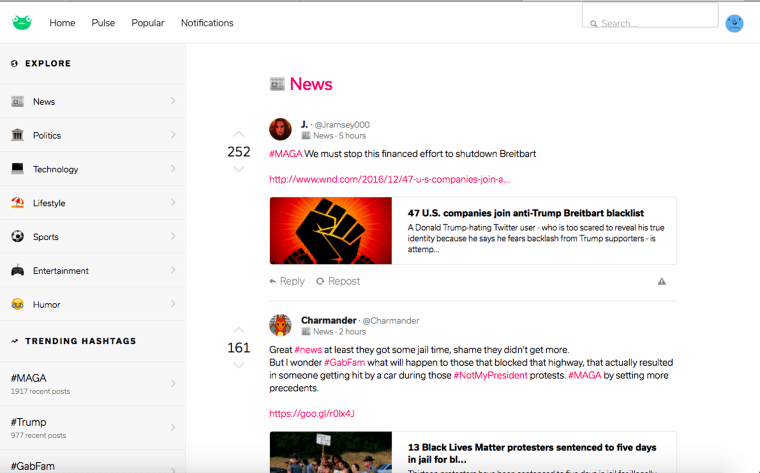
That's the precise reason why many people are gravitating to Gab, according to CEO Andrew Torba.
The new social network, which has been called by some "Facebook for the alt-right," has more than 100,000 accounts and twice as many people on its waiting list. Gab has billed itself as a place where people are free to speak their minds.
"The reason for the massive demand is simple: People around the world experience that they cannot speak freely and express themselves online. They've seen censorship at scale, progressive-leaning bias, and recognize the monopoly that Silicon Valley has on data, communication, and news online," Torba told NBC News.
At that place are still some rules, though. Gab won't tolerate terroristic threats, illegal pornography and posting other people's personal information. Finally, they practise add that it would be lovely if everyone tried to be nice to each other.
While Gab has attracted many conservatives who feel their voices are existence stifled elsewhere, Gab'southward team is also quick to point out its diversity. The company'south iii executives are a conservative Christian, a Muslim Turkish Kurd, and an Indo-Canadian with Hindu behavior.
"Our policy is to allow costless speech inside the limitations of the police as a U.s.a. corporation. Nosotros are aiming to simplify our guidelines even further in the time to come to express this point," Torba said.
Letting the User Take Control of the Experience
Gab relies on filters, allowing people to choose what they don't want to see. With the user empowered, Torba said "very few people use it [a reporting characteristic], mainly because they can already control their own experience."
In Nov, Twitter rolled out a similar characteristic that allows people to mute keywords and phrases, preventing them from showing up in their notifications.
"Our hateful bear policy prohibits specific deport that targets people on the basis of race, ethnicity, national origin, sexual orientation, gender, gender identity, religious affiliation, age, inability, or disease," the company said in a blog post.
"We don't expect these announcements to suddenly remove abusive acquit from Twitter. No single action past us would do that. Instead, nosotros commit to quickly improving Twitter based on everything we observe and learn."
Self-Advocacy in the Online Space
When information technology comes to harassment, "I think that the solution lies in the space of allowing people to command what they see and for platforms to decide what they want to exist platforms for," Golbeck said. "Practice they desire to exist a identify where it is a cesspool with what people say online?"
Every bit long as the heaven is blue, there will almost likely all the same be internet trolls. Even so, the rash of faux news is a relatively new problem. Golbeck likened information technology to the 1990s when you could search for something equally innocuous every bit broccoli and get porn sites looking to make money.
Money is, of grade, one of the cardinal motivators for many of the fake news sites. Hitting these faux news outlets in the pocketbook may be the best mode to cease them in their tracks, Golbeck said.
Related: Twitter Launches New Anti-Troll Safety Committee
"They are going to write whatsoever they want, and the more than people click, the more money they make," she said. "There is a temptation to make an ideological statement, but really they are motivated by the money."
Facebook and Google both fabricated it clear last month they won't allow sites spreading misinformation to run on their advertisement networks, essentially cutting off their master source of revenue.
Golbeck said it will be "interesting to see how this plays out" and that she's hopeful it "could have a existent chilling effect on imitation news."
But cutting the purse strings is just one office of the battle against misinformation.
Less than two weeks after the election, with the issue still simmering, Zuckerberg shared a more than detailed account of projects he said were already underway to stop these sites.
"The nigh important thing we can do is improve our ability to allocate misinformation. This means better technical systems to detect what people will flag equally faux before they do it themselves," he said.
He also said he wants to brand information technology easier for people to flag simulated stories and that Facebook will focus on "raising the bar" for stories that announced in the News Feed.
While Golbeck is hopeful that Facebook, Twitter, and other platforms will continue to make progress with an arroyo of using algorithms and humans to monitor troubling letters, she pointed out that the trouble volition continue on in some other corner of the cyberspace, and there's likely piddling we can practise nigh it.
"They aren't mainstream, but y'all tin can get that stuff up if you want to. The question is, 'What kind of audience practise they become?'" she said. "In that location are plenty of platforms and places that only don't care what people are posting."

Source: https://www.nbcnews.com/tech/internet/where-do-we-draw-line-when-it-comes-free-speech-n690906
Posted by: logstonaniguld.blogspot.com
0 Response to "Where Do You Draw The Line Between Free Speech And Indecency?"
Post a Comment